Early Submarines-
The first submersible of whose construction we have reliable information was built in 1620 by Cornelius Drebbel, a Dutchman in the service of James I of England. It was created to the standards of the design outlined by English mathematician William Bourne. It was propelled by means of oars. The precise nature of the submarine type is a matter of some controversy; some claim that it was merely a bell towed by a boat.
By the mid 18th century, over a dozen patents for submarines/submersible boats had been granted in England. In 1747, Nathaniel Symons patented and built the first known working example of the use of a ballast tank for submersion. His design used leather bags that could fill with water to submerge the craft. A mechanism was used to twist the water out of the bags and cause the boat to resurface. In 1749 the Gentlemen's Magazine reported that a similar design had initially been proposed by Giovanni Borelli in 1680. By this point of development, further improvement in design necessarily stagnated for over a century, until new industrial technologies for propulsion and stability could be applied
The first military submarine was the Turtle (1775), a hand-powered acorn-shaped device designed by the American David Bushnell to accommodate a single person. It was the first verified submarine capable of independent underwater operation and movement, and the first to use screws for propulsion. In 1800, France built a human-powered submarine designed by American Robert Fulton, the Nautilus. The French eventually gave up on the experiment in 1804, as did the British when they later considered Fulton's submarine design.
In 1864, the fourth year of the American Civil War, the Confederate navy's H. L. Hunley became the first military submarine to successfully sink an enemy vessel. In the aftermath of its successful attack against an American Union ship, the Hunley also sank, possibly due to its being too close to its own exploding torpedo.
Mechanical power-
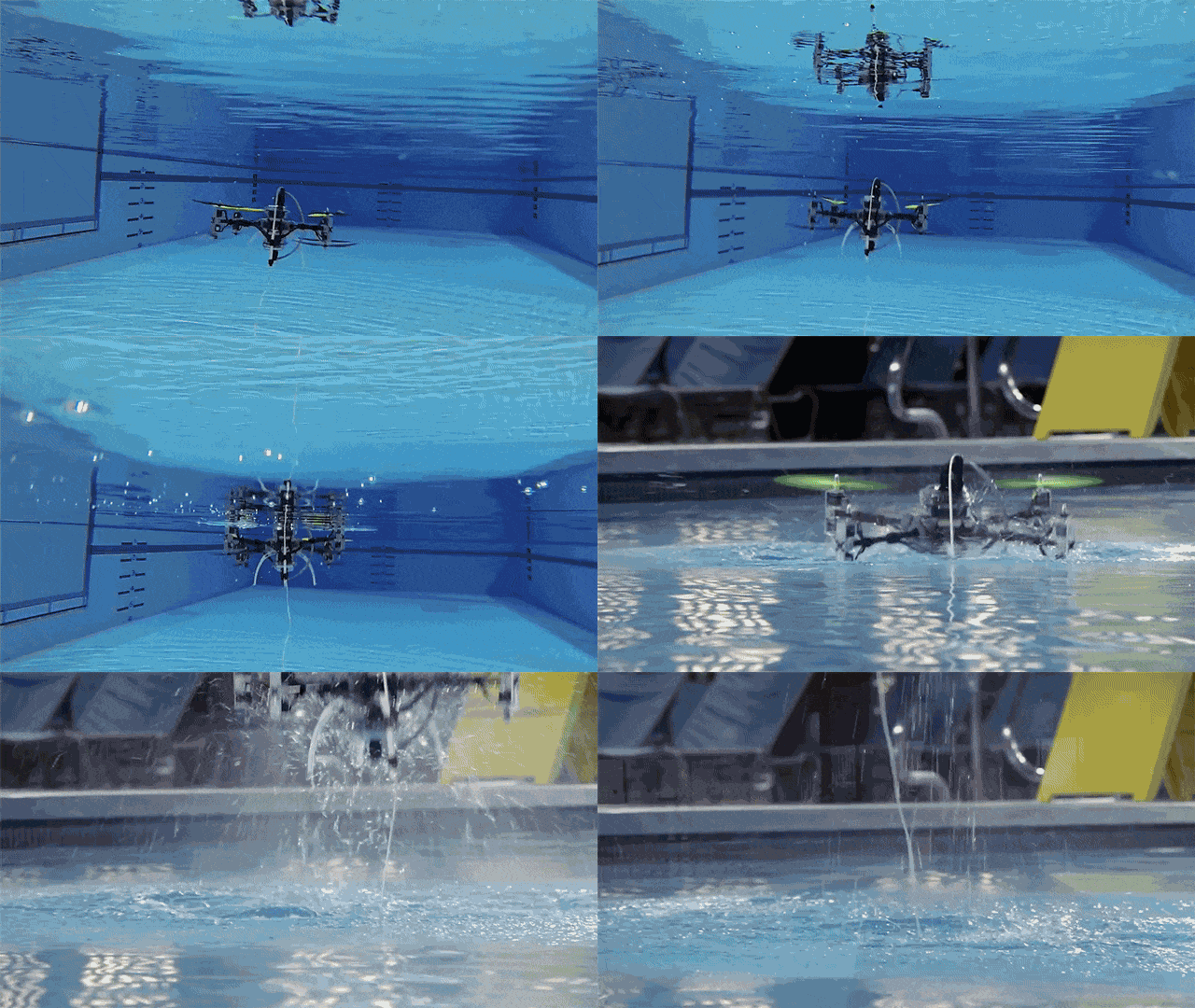
The first submarine not relying on human power for propulsion was the French Plongeur (Diver), launched in 1863, and using compressed air at 180 psi (1241kPa).
The first air independent and combustion powered submarine was the Ictineo II, designed by the Spanish intellectual, artist and engineer Narcís Monturiol. Launched in Barcelona in 1864, it was originally human-powered, but in 1867 Monturiol invented an air independent engine to power it underwater. The 14 m (46 ft) long craft was designed for a crew of two, performed dives of 30 m (98 ft) and remained underwater for two hours. Both the Ictineo I and II were double hulled vessels that solved pressure and buoyancy control problems that had troubled and limited the functionality of earlier submarines.
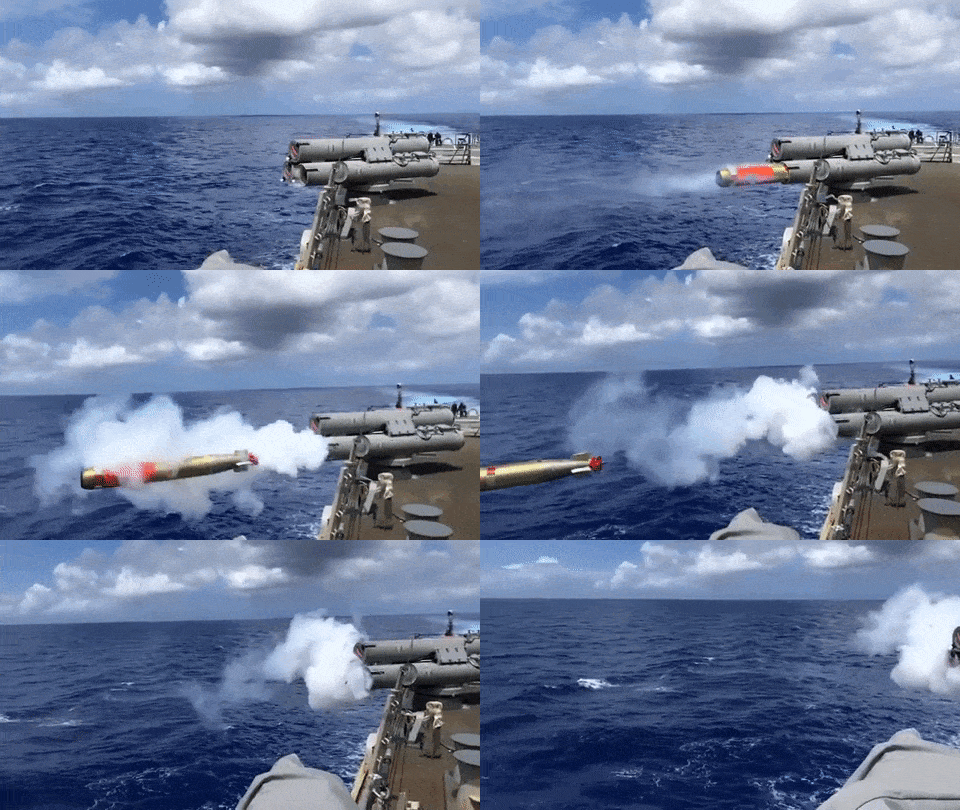
The submarine became a potentially viable weapon with the development of the Whitehead torpedo, the first practical self-propelled or 'locomotive' torpedo. The spar torpedo that had been developed earlier by the Confederate navy was considered to be impracticable, as it was believed to have sunk both its intended target, and probably the H. L. Hunley, the submarine that deployed it. The Whitehead torpedo was designed in 1866 by British engineer Robert Whitehead. His 'mine ship' was an 11-foot long, 14-inch diameter torpedo propelled by compressed air and carried an explosive warhead. The device had a speed of 7 knots (13 km/h) and it could hit a target 700 yards (640 m) away.
Discussions between the English clergyman and inventor George Garrett and the Swedish industrialist Thorsten Nordenfeltled to the first practical steam-powered submarines, armed with torpedoes and ready for military use. The first was theNordenfelt I, a 56 tonne, 19.5 metre (64 ft) vessel similar to Garret's ill-fated Resurgam (1879), with a range of 240 kilometres (150 mi, 130 nm), armed with a single torpedo, in 1885.
Like Resurgam, Nordenfelt I operated on the surface by steam, then shut down its engine to dive. While submerged the submarine released pressure generated when the engine was running on the surface to provide propulsion for some distance underwater. Greece, fearful of the return of the Ottomans, purchased it. Nordenfelt then built Nordenfelt II (Abdül Hamid) in 1886 and Nordenfelt III (Abdül Mecid) in 1887, a pair of 30 metre (100 ft) submarines with twin torpedo tubes, for the Ottoman navy. Abdülhamid became the first submarine in history to fire a torpedo submerged. Nordenfelt's efforts culminated in 1887 with Nordenfelt IV, which had twin motors and twin torpedoes. It was sold to the Russians, but proved unstable, ran aground, and was scrapped.
A reliable means of propulsion for the submerged vessel was only made possible in the 1880s with the advent of the necessary electric battery technology. The first electrically powered boats were built by James Franklin Waddington in England, Dupuy de Lome and Gustave Zédé in France and Isaac Peral in Spain.
Waddington's Porpoise was similar in size to the Resurgam and its propulsion system consisted of 45 accumulator cells with a capacity of 660 ampere hours each. These were coupled in series to a motor driving a propeller at about 750 rpm, giving the ship a sustained speed of 8 mph for at least 8 hours. The boat was armed with two externally mounted torpedoes as well as a mine torpedo that could be detonated electronically. Although the boat performed well at trials, Waddington was unable to attract further contracts and went bankrupt.
The Spanish Peral Submarine was launched in 1888, and had 3 Schwarzkopf torpedoes 14 in (360 mm) and one torpedo tube in bow, new air systems, hull shape, propeller, and cruciform external controls anticipating much later designs. Peralwas an all-electrical powered submarine. After two years of trials the project was scrapped by naval officialdom who cited, among other reasons, concerns over the range permitted by its batteries.
The Gymnote was launched by the French Navy in the same year. Gymnote was also an electrically powered and fully functional military submarine. It completed over 2,000 successful dives using a 204-cell battery. Although the Gymnotewas scrapped for its limited range, its side hydroplanes became the standard for future submarine designs.
The modern submarine-
Submarines were not put into service for any widespread or routine use by navies until the early 1900s. The turn of the century marked a pivotal time in submarine development, and a number of important technologies appeared. A number of nations built and used submarines. Diesel electric propulsion became the dominant power system and equipment such as the periscope became standardized. Countries conducted many experiments on effective tactics and weapons for submarines, which led to their large impact in World War I. The Irish inventor John Philip Holland built a model submarine in 1876 and a full scale one in 1878, followed by a number of unsuccessful ones. In 1896 he designed the Holland Type VI submarine. This vessel made use of internal combustion engine power on the surface and electric battery power for submerged operations. Launched on 17 May 1897 at Navy Lt. Lewis Nixon's Crescent Shipyard in Elizabeth,New Jersey, the Holland VI was purchased by the United States Navy on 11 April 1900, becoming the United States Navy's first commissioned submarine and renamed USS Holland.
Commissioned in June 1900, the French steam and electric Narval employed the now typical double-hull design, with a pressure hull inside the outer shell. These 200-ton ships had a range of over 100 miles (160 km) underwater. The French submarine Aigrette in 1904 further improved the concept by using a diesel rather than a gasoline engine for surface power. Large numbers of these submarines were built, with seventy-six completed before 1914.
The Royal Navy commissioned five Holland-class submarines from Vickers, Barrow-in-Furness, under licence from theHolland Torpedo Boat Company during the years 1901 to 1903. Construction of the boats took longer than anticipated, with the first only ready for a diving trial at sea on 6 April 1902. Although the design had been purchased entire from the US company, the actual design used was an untested improved version of the original Holland design using a new 180 hp petrol engine.
These types of submarines were first used during the Russo-Japanese War of 1904–05. Due to the blockade at Port Arthur, the Russians sent their submarines to Vladivostok, where by 1 January 1905 there were seven boats, enough to create the world's first "operational submarine fleet". The new submarine fleet sent out its first patrol on 14 February, usually lasting for about 24 hours. The first confrontation with Japanese warships occurred on 29 April 1905 when the Russian submarine Som was fired upon by Japanese torpedo boats, but then withdrew.
Modern Military models-
The first launch of a cruise missile (SSM-N-8 Regulus from a submarine occurred in July 1953, from the deck of USS Tunny, a World War II fleet boat modified to carry this missile with a nuclear warhead. Tunny and its sister boat, Barbero, were theUnited States' first nuclear deterrent patrol submarines. In the 1950s, nuclear power partially replaced diesel-electric propulsion. Equipment was also developed to extract oxygen from sea water. These two innovations gave submarines the ability to remain submerged for weeks or months. Most of the naval submarines built since that time in the United States, the Soviet Union/Russia, Britain and France have been powered by nuclear reactors.
In 1959–1960, the first ballistic missile submarines were put into service by both the United States (George Washington class) and the Soviet Union (Hotel class) as part of the Cold War nuclear deterrent strategy.
During the Cold War, the United States and the Soviet Union maintained large submarine fleets that engaged in cat-and-mouse games. The Soviet Union suffered the loss of at least four submarines during this period: K-129 was lost in 1968 (which the CIA attempted to retrieve from the ocean floor with the Howard Hughes-designed ship Glomar Explorer), K-8 in 1970, K-219 in 1986, and Komsomolets in 1989 (which held a depth record among military submarines—1000 m). Many other Soviet subs, such as K-19 (the first Soviet nuclear submarine, and the first Soviet sub to reach the North Pole) were badly damaged by fire or radiation leaks. The US lost two nuclear submarines during this time: USS Thresher due to equipment failure during a test dive while at its operational limit, and USS Scorpion due to unknown causes.
During the Indo-Pakistani War of 1971, the Pakistan Navy's Hangor sank the Indian frigate INS Khukri. This was the first kill by a submarine since World War II. In 1971, the Ghazi, a Tench-class submarine on loan to Pakistan from the US, was sunk in the Indo-Pakistani War. It was the first submarine war loss since World War II. In 1982 during the Falklands War, the Argentine cruiser General Belgrano was sunk by the British submarine HMS Conqueror, the first sinking by a nuclear-powered submarine in war.
Civil-
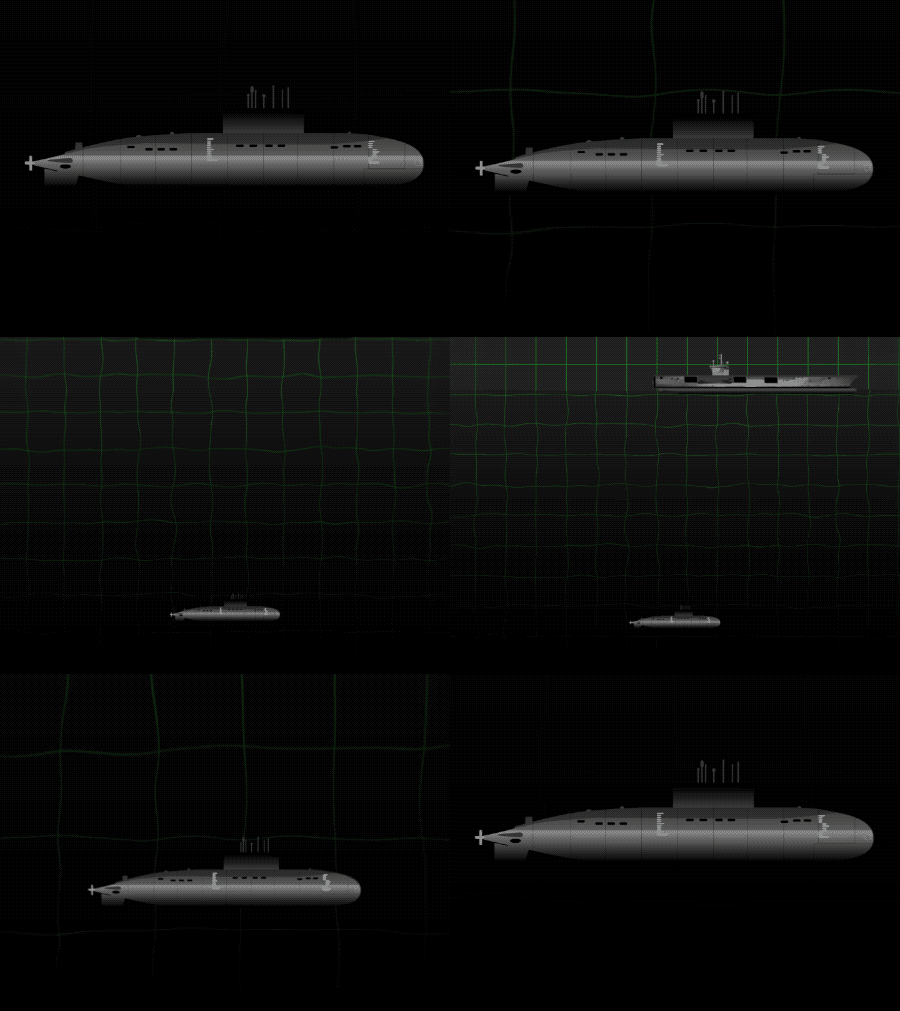
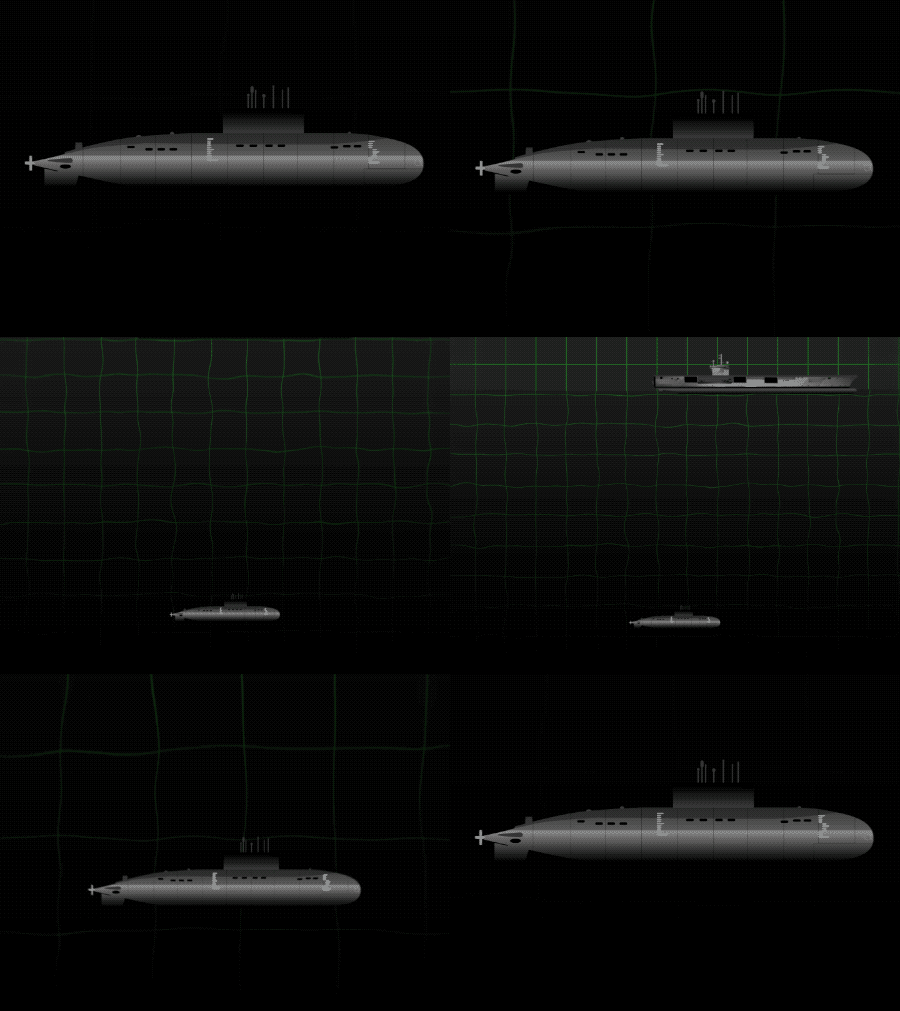
Although the majority of the world's submarines are military, there are some civil submarines. They have a variety of uses, including tourism, exploration, oil and gas platform inspections, and pipeline surveys. The first tourist submarine was launched in 1985, and by 1997 there were 45 of them operating around the world. Submarines with a crush depth in the range of 400–500 feet (120–150 m) are operated in several areas worldwide, typically with bottom depths around 100 to 120 feet (30 to 37 m), with a carrying capacity of 50 to 100 passengers. In a typical operation (for example, Atlantis submarines), a surface vessel carries passengers to an offshore operating area, where passengers are exchanged with those of the submarine. The submarine then visits underwater points of interests, typically either natural or artificial reef structures. To surface safely without danger of collision the location of the submarine is marked with an air release and movement to the surface is coordinated by an observer in a support craft.
A recent development is the deployment of so-called narco submarines by South American drug smugglers to evade law enforcement detection. Although they occasionally deploy true submarines, most are self-propelled semi-submersibles, where a portion of the craft remains above water at all times. In September 2011, Colombian authorities seized a 16-meter-long submersible that could hold a crew of 5, costing about $2 million. The vessel belonged to FARC rebels and had the capacity to carry at least 7 tonnes of drugs.
Submarine & Trimming-
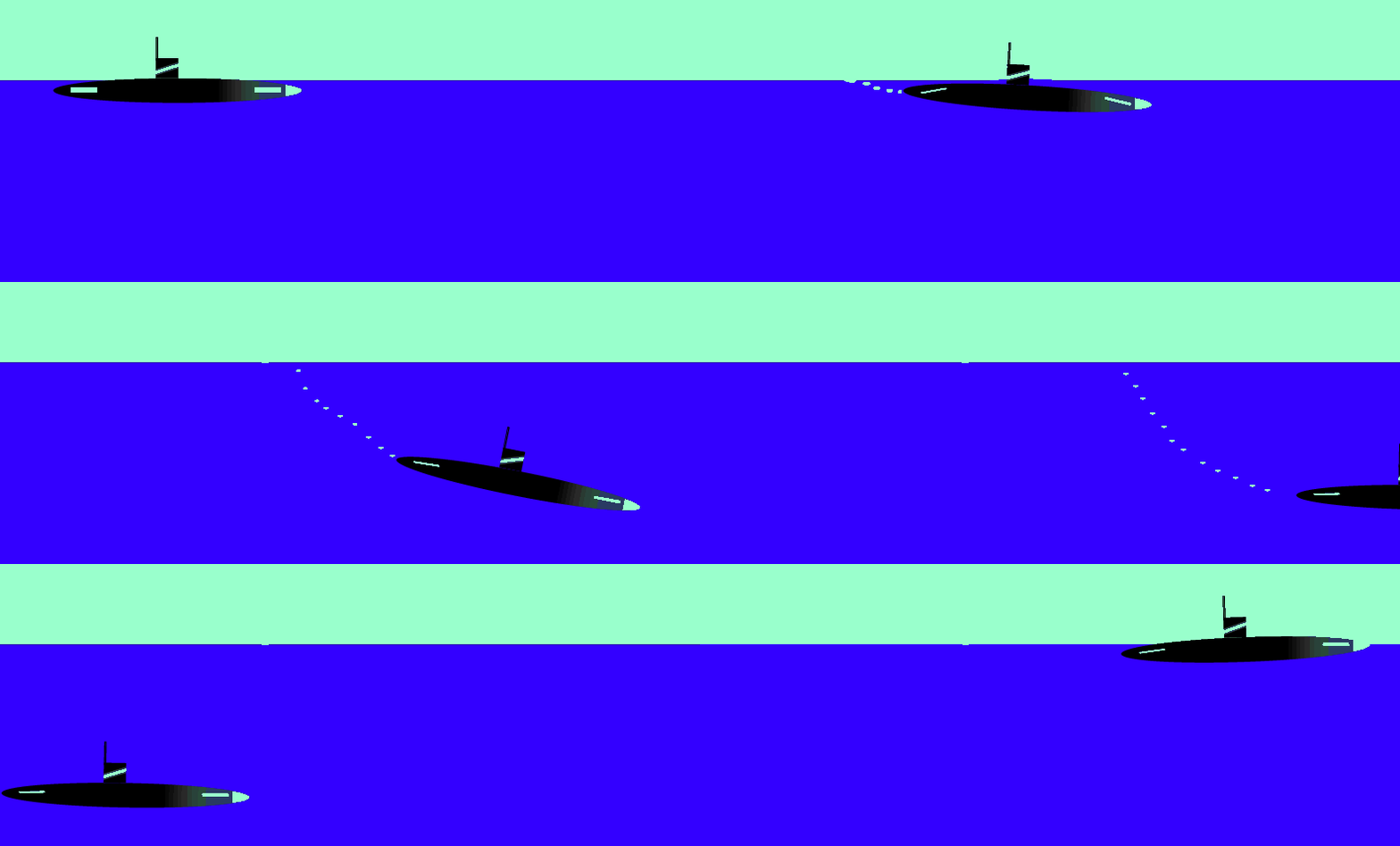
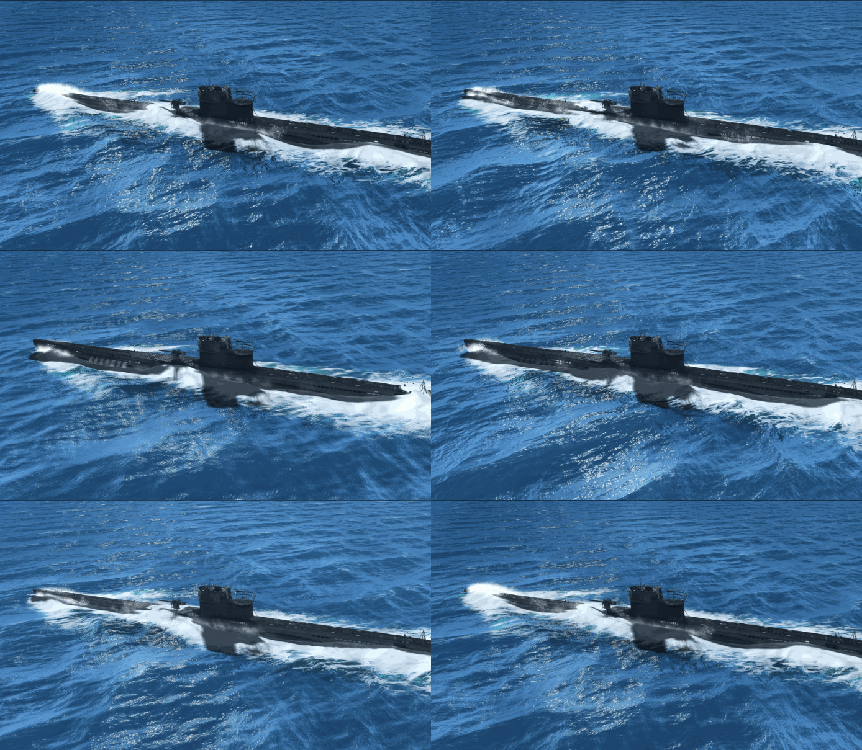
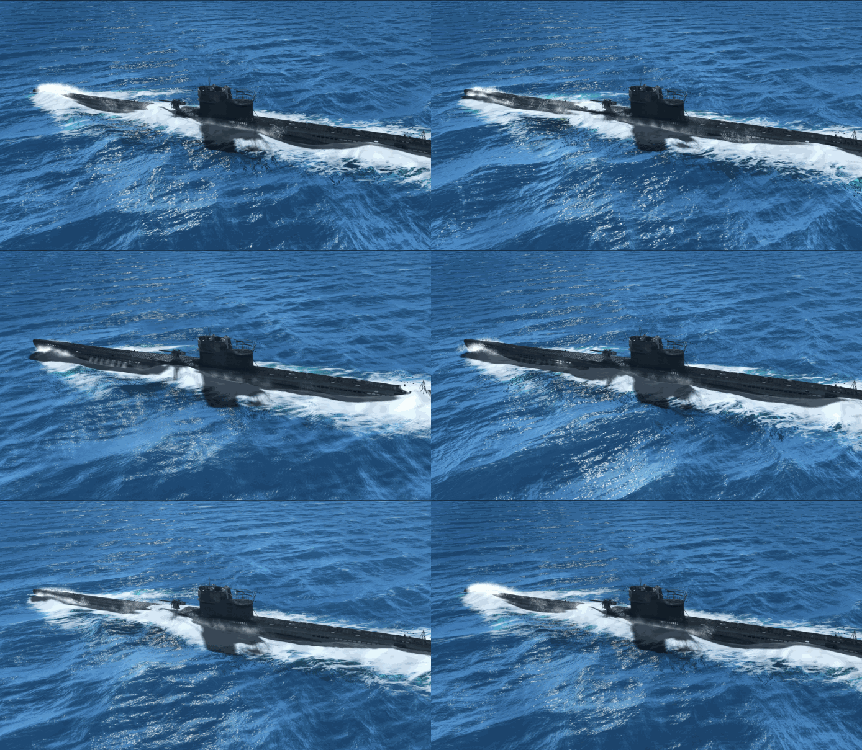
All surface ships, as well as surfaced submarines, are in a positively buoyant condition, weighing less than the volume of water they would displace if fully submerged. To submerge hydrostatically, a ship must have negative buoyancy, either by increasing its own weight or decreasing its displacement of water. To control their weight, submarines have ballast tanks, which can hold varying amounts of water and air.
For general submersion or surfacing, submarines use the forward and aft tanks, called Main Ballast Tanks, or MBTs, which are filled with water to submerge or with air to surface. Submerged, MBTs generally remain flooded, which simplifies their design, and on many submarines these tanks are a section of interhull space. For more precise and quick control of depth, submarines use smaller Depth Control Tanks, or DCTs – also called hard tanks, due to their ability to withstand higher pressure. The amount of water in depth control tanks can be controlled to change depth or to maintain a constant depth as outside conditions (chiefly water density) change. Depth control tanks may be located either near the submarine's center of gravity, or separated along the submarine body to prevent affecting trim.
When submerged, the water pressure on a submarine's hull can reach 4MPa (580 psi) for steel submarines and up to 10 MPa (1,500 psi) for titanium submarines like K-278 Komsomolets, while interior pressure remains relatively unchanged. This difference results in hull compression, which decreases displacement. Water density also increases with depth, as the salinity and pressure are higher, but this incompletely compensates for hull compression, so buoyancy decreases as depth increases. A submerged submarine is in an unstable equilibrium, having a tendency to either fall or float to the surface. Keeping a constant depth requires continual operation of either the depth control tanks or control surfaces
A submarine can have a variety of sensors, depending on its missions. Modern military submarines rely almost entirely on a suite of passive and active sonars to find targets. Active sonar relies on an audible "ping" to generate echoes to reveal objects around the submarine. Active systems are rarely used, as doing so reveals the sub's presence. Passive sonar is a set of sensitive hydrophones set into the hull or trailed in a towed array, generally several hundred feet long. The towed array is the mainstay of NATO submarine detection systems, as it reduces the flow noise heard by operators. Hull mounted sonar is employed to back up the towed array, and in confined waters where obstacles could foul a towed array.
Submarines also carry radar equipment to detect surface ships and aircraft. Submarine captains are more likely to use radar detection gear than active radar to detect targets, as radar can be detected far beyond its own return range, revealing the submarine. Periscopes are rarely used, except for position fixes and to verify a contact's identity.
Civilian submarines, such as the DSV Alvin or the Russian Mir submersibles, rely on small active sonar sets and viewing ports to navigate. The human eye cannot detect sunlight below about 300 feet (91 m) underwater, so high intensity lights are used to illuminate the viewing area.
Early submarines had few navigation aids, but modern subs have a variety of navigation systems. Modern military submarines use an inertial guidance system for navigation while submerged, but drift error unavoidably builds over time. To counter this, the crew occasionally uses the Global Positioning System to obtain an accurate position. The periscope—a retractable tube with a prism system that provides a view of the surface—is only used occasionally in modern submarines, since the visibility range is short. The Virginia-class and Astute-class submarines use photonics masts rather than hull-penetrating optical periscopes. These masts must still be deployed above the surface, and use electronic sensors for visible light, infrared, laser range-finding, and electromagnetic surveillance. One benefit to hoisting the mast above the surface is that while the mast is above the water the entire sub is still below the water and is much harder to detect visibly or by radar.
Military submarines use several systems to communicate with distant command centers or other ships. One is VLF (Very Low Frequency) radio, which can reach a submarine either on the surface or submerged to a fairly shallow depth, usually less than 250 feet (76 m). ELF (Extremely Low Frequency) can reach a submarine at much greater depths, but has a very low bandwidth and are generally used to call a submerged sub to a shallower depth where VLF signals can reach. A submarine also has the option of floating a long, buoyant wire antenna to a shallower depth, allowing VLF transmissions by a deeply submerged boat.
By extending a radio mast, a submarine can also use a "burst transmission" technique. A burst transmission takes only a fraction of a second, minimizing a submarine's risk of detection.
To communicate with other submarines, a system known as Gertrude is used. Gertrude is basically a sonar telephone. Voice communication from one submarine is transmitted by low power speakers into the water, where it is detected by passive sonars on the receiving submarine. The range of this system is probably very short, and using it radiates sound into the water, which can be heard by the enemy.
Civilian submarines can use similar, albeit less powerful systems to communicate with support ships or other submersibles in the area.
Life support systems-
With nuclear power or Air-independent propulsion, submarines can remain submerged for months at a time. Conventional diesel submarines must periodically resurface or snorkel to recharge their batteries. Most modern military submarines generate breathing oxygen by electrolysis of water. Atmosphere control equipment includes a CO2 scrubber, which uses an amine absorbent to remove the gas from air and diffuse it into waste pumped overboard. A machine that uses a catalyst to convert carbon monoxide into carbon dioxide (removed by the CO2 scrubber) and bonds hydrogen produced from the ship's storage battery with oxygen in the atmosphere to produce water, is also used. An atmosphere monitoring system samples the air from different areas of the ship for nitrogen, oxygen, hydrogen, R-12 and R-114 refrigerants, carbon dioxide, carbon monoxide, and other gases. Poisonous gases are removed, and oxygen is replenished by use of an oxygen bank located in a main ballast tank. Some heavier submarines have two oxygen bleed stations (forward and aft). The oxygen in the air is sometimes kept a few percent less than atmospheric concentration to reduce fire danger.
Fresh water is produced by either an evaporator or a reverse osmosis unit. The primary use for fresh water is to provide feed water for the reactor and steam propulsion plants. It is also available for showers, sinks, cooking and cleaning once propulsion plant needs have been met. Seawater is used to flush toilets, and the resulting "black water" is stored in a sanitary tank until it is blown overboard using pressurized air or pumped overboard by using a special sanitary pump. The method for blowing sanitaries overboard is difficult to operate, and the German Type VIIC boat U-1206 was lost with casualties because of a mistake with the toilet. Water from showers and sinks is stored separately in "grey water" tanks, which are pumped overboard using the drain pump.
Trash on modern large submarines is usually disposed of using a tube called a Trash Disposal Unit (TDU), where it is compacted into a galvanized steel can. At the bottom of the TDU is a large ball valve. An ice plug is set on top of the ball valve to protect it, the cans atop the ice plug. The top breech door is shut, and the TDU is flooded and equalized with sea pressure, the ball valve is opened and the cans fall out assisted by scrap iron weights in the cans. The TDU is also flushed with seawater to ensure it is completely empty and the ball valve is clear before shutting the valve.